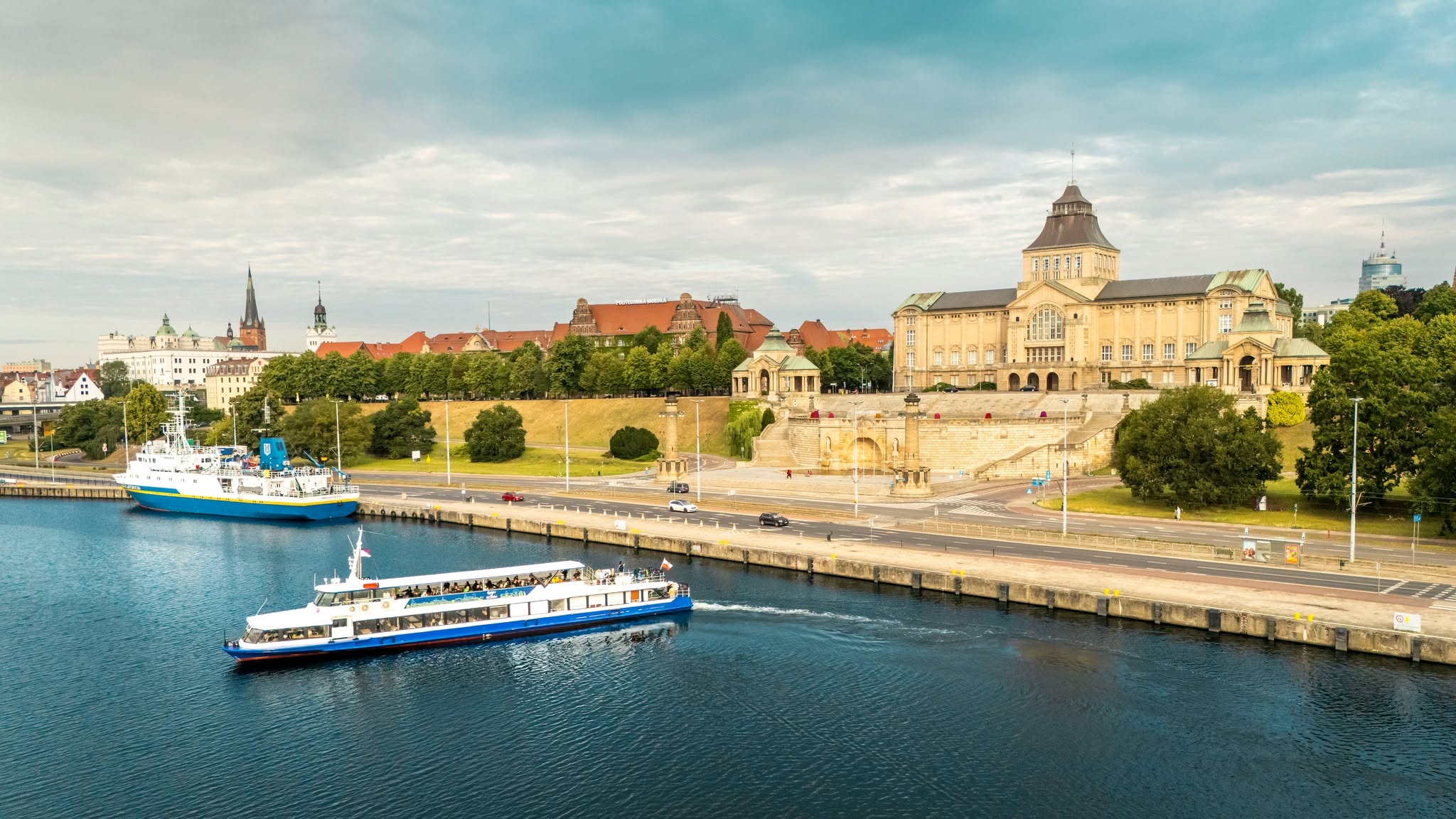
Szczecin is a city in the northwest of Poland, which overlooks the Oder River near the border with Germany. Locals know the city as an important historic port and cultural and economic center in the Baltic and the capital of the West Pomeranian Voivodeship.
In a picturesque view, monumental terraces of Wały Chrobrego are looming over the Oder River. Behind you, there are many historical gothic churches, a Renaissance castle and streets built by several different chapters of European history. Up ahead, shipping and boats go through the waterways daily, which represents the heart and the identity of the city that always was.
Szczecin is one of Poland’s largest cities, but its history is very much linked to Germany and the greater Baltic region. It is a port, but not directly on the open Baltic. Most of its historic center was obliterated during the Second World War but fragments of the old city survive alongside ambitious post-war reconstruction and stures of it.
Here are some things you can do in three days if you choose to travel to this northern city and spend your vacation in the Pomeranian region. This will allow you to spend more time exploring the city than just taking pictures of it.
Day One: Explore the Historic Centre of Szczecin
Step into the heart of Pomeranian history
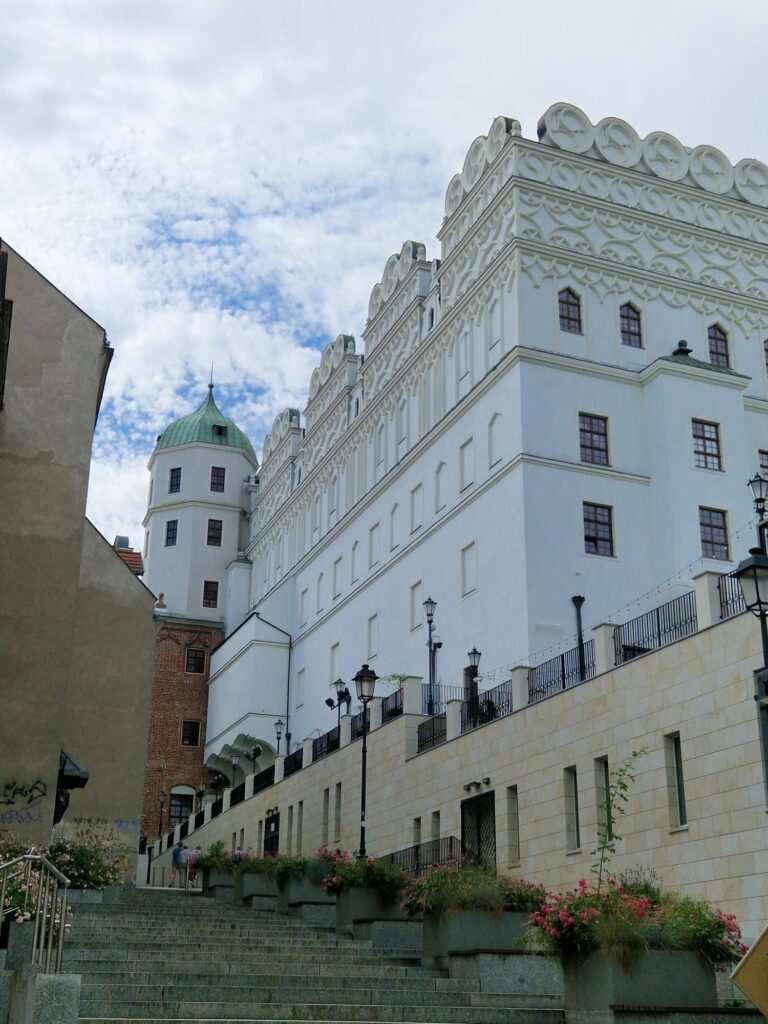
Begin at the Pomeranian Dukes’ Castle, the elegant Renaissance complex that dominates the old centre. This is the historic residence of the Griffin dynasty, which ruled the Duchy of Pomerania from the 12th to the 17th century. Today it is one of Szczecin’s major cultural institutions. Here, you will find exhibitions, art galleries, a cinema, and the only one in Poland: Opera at the Castle.
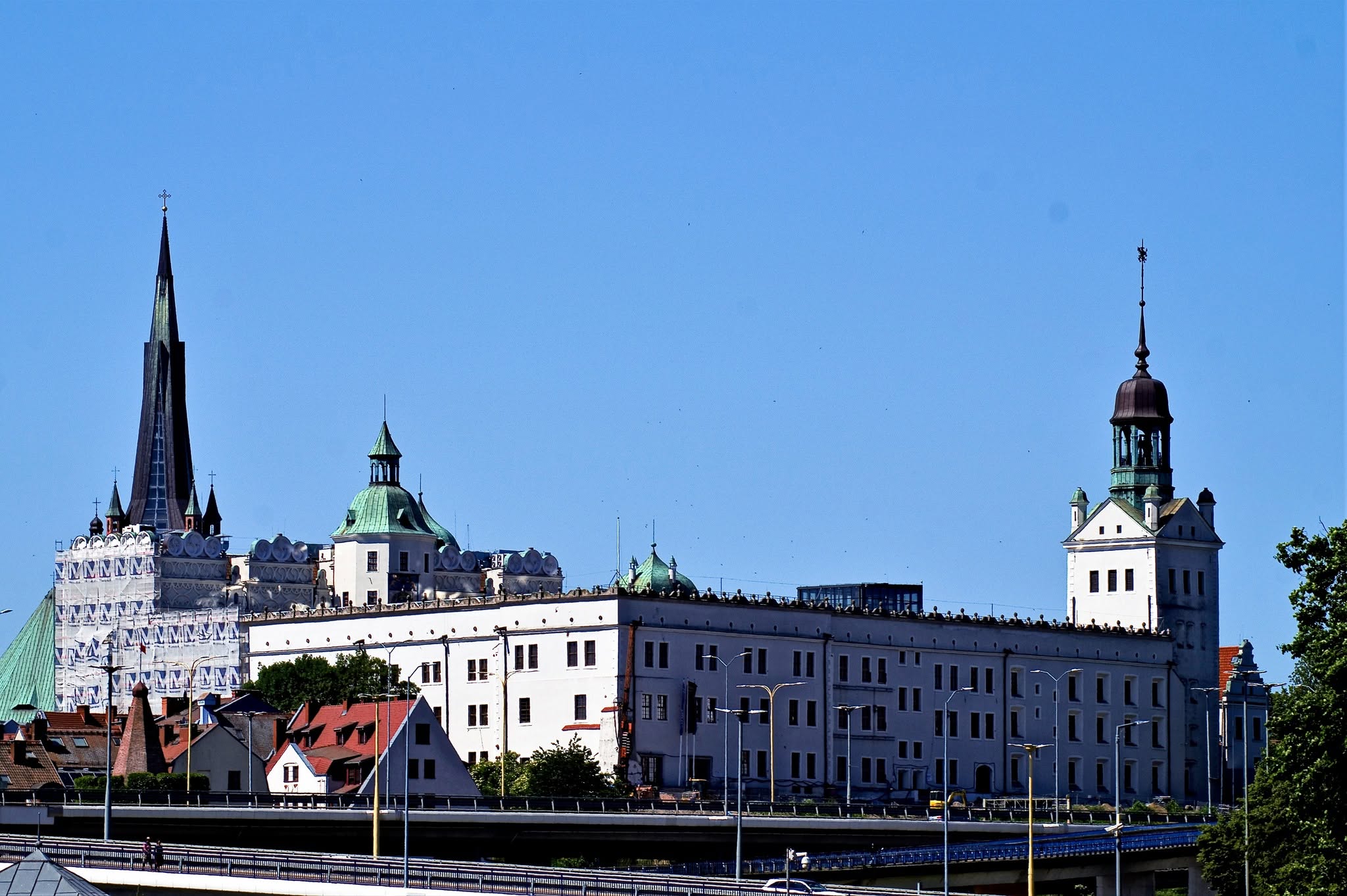
The castle courtyards and the newly opened terrace overlooking the Oder River are also worth a visit. The highest point of the building is the Bell Tower. After climbing over 200 stairs, you will get an exceptional panoramic view of the city center and the Old Town.
Wander the city’s reborn Old Town
Just a short walk from the castle, head toward the reconstructed Old Town. This is not an untouched medieval quarter. Much of Szczecin was devastated during the Second World War, and the appearance of today’s Old Town reflects post-war reconstruction. The result is unusual: historic forms alongside buildings that belong unmistakably to a later era.
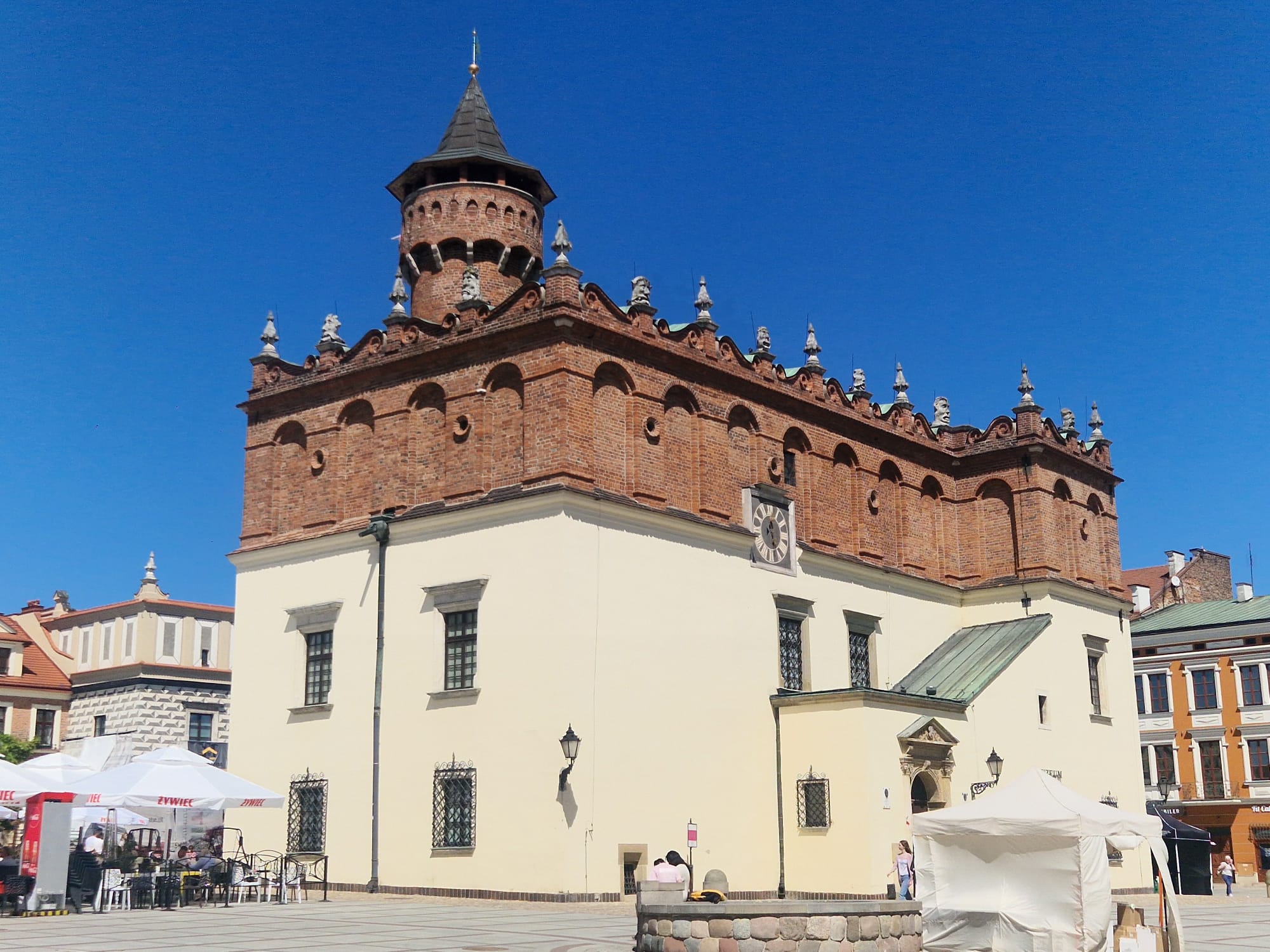
Szczecin’s old town, although not large, shows what Szczecin looked like several hundred years ago. In its centre, there is one of the few monuments that has stood the test of time – the old town hall now home to the National Museum. There you will have a chance to visit also the Sienny Market Square, the Loitz family house, or the Maiden Tower, which is shroud in the legend of the seven coats.
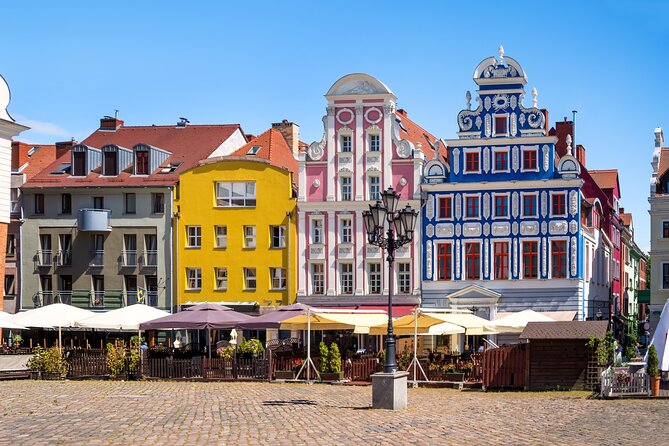
You can stop at the Old Town Hall and the streets around it for a break, and you’ll find local and international restaurants, before heading toward St James Cathedral.
The tower of the cathedral is one of the best vantage points in the city. It’s much easier to see Szczecin as a whole from its tower, where the Oder, islands, bridges, parks, and wide avenues all meet together to form one huge panoramic view. The basilica’s 110-meter-tall spire, the highest cathedral tower in Poland, makes it visible from many locations throughout the city. The entire city is seen from the tower’s vantage point.
Take in the city’s riverside views and surrounds
As afternoon slowly turns toward evening, head for Wały Chrobrego (Haken’s Terrace), Szczecin’s famous riverside terrace.
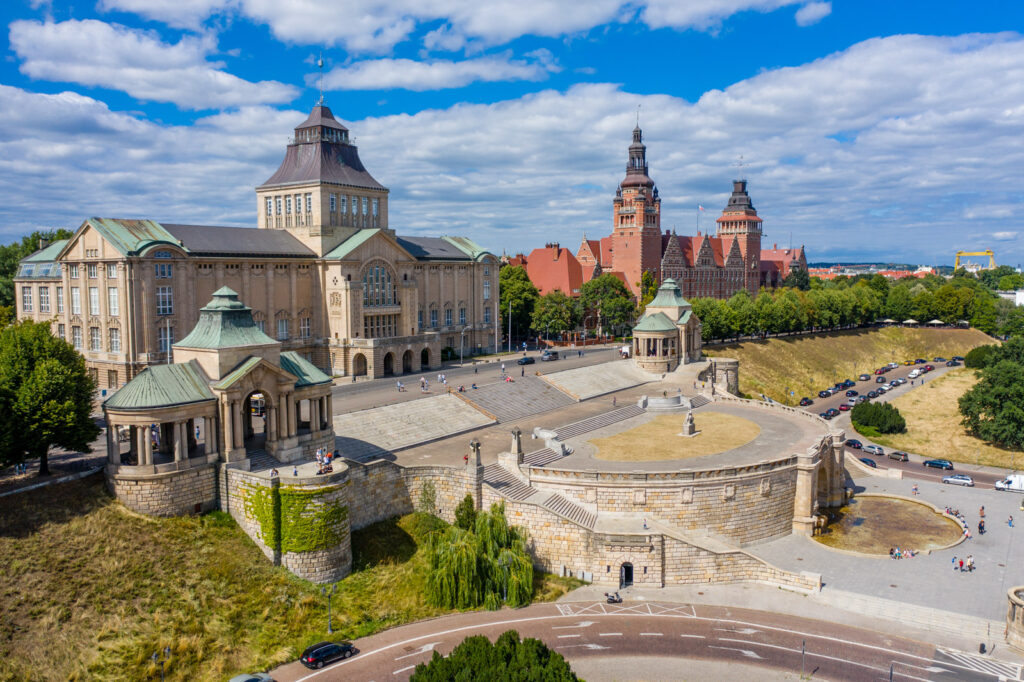
Constructed in the early 1900s, the terrace showcases the imposing structures of the National Museum, the Maritime University of Szczecin, and the West Pomeranian Voivodeship office. The view from the Chrobry embankment is fantastic. See the activity in the Szczecin harbor, and in the evening, take in the Maritime Science Centre and the illuminated Craneosaurs.
From the riverside, make your way toward the city at the ”Spinach Palace” which is the seat of the city authorities. At 12 noon, ”Hejnał” (the Szczecin bugle call) can be heard from there, and the building is integrated into the green surroundings of the Jasne Błonia square.
From here, continue into the city and take a closer look at the Wojska Polskiego Avenue, or rather its downtown section, is one of the most representative streets in Szczecin. Here you will find the famous ”Pasztecik” bar and other facilities frequently visited by the oldest residents of Szczecin.
Admire the surroundings of the two historic squares dominated by the brick red Town Hall. To the west, Batory Square overlooks the Oder River and the imposing neo-Gothic Polish Post Office. The building is three-storey, built of red, partly glazed brick and has a beautifully decorated façade; it is erected on the site of the former fortifications and casemates, between the present Port Gate and Royal Bastion. Check out the stone base of the building, decorative ironwork, steel railings, balustrades and handrails, all demonstrating the craftsmanship of the period.
At Wojska Polskiego Avenue, there is also the Kino Pionier 1907. It is one of the oldest continuisly operating cinemas in the world, which is confirmed by the entry in the Guinness Book of Records. With more than a century of tradition, the cinema has a unique atmosphere. In ”Kniarania”, you can watch films sitting at a table with a glass of wine. Or the second option, sitting in a soft armchair in the historical room. Isn’t this the perfect way to end an evining in Szczecin after a long day of the city history, streets and waterfront?
At this point, Szczecin starts to feel less like a neglected Polish city and more like the water-shaped city it has always been.
Day Two: Szczecin through Art, Architecture and Green Spaces
First, leisure in the green heart of the city
On your second morning in Szczecin, with summer still on its way in and the green spaces looks sharply lush, we recommend you start your day visiting Jasne Błonia and Kasprowicz Park, two of Szczecin’s top green spots.
Jasne Błonia Square, the John Paul II Park, is a wonderful spot for leisure and recreation, including strolling, cycling, and lounging on benches. The favourite park for Szczecin inhabitants because of the blooming ”crocus capret” at the feet of the plane trees in early March.
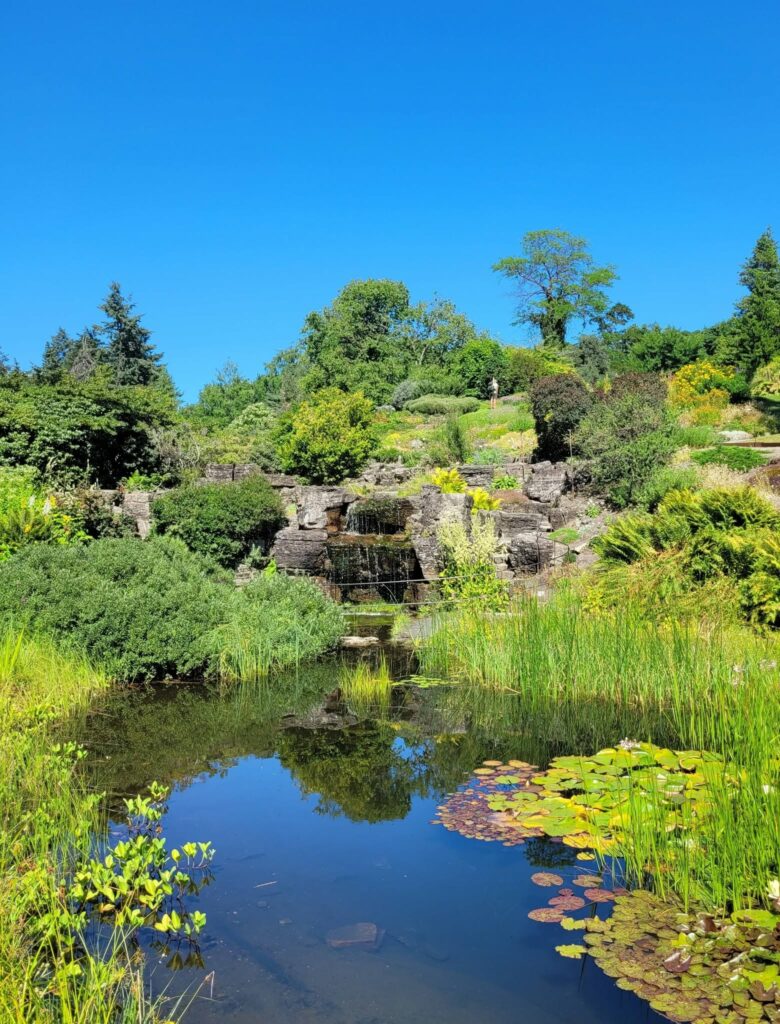
Along with Jasne Błonia Square, Kasprowicz Park is the largest park in Szczecin today and also another harbinger spot to unwind. The park was donated to the city by Johannes Quistrop, who wanted it to be always used for recreational purposes. From the beginning, the park has been a great attraction and an easy antidote to a day of architecture and museums. Concerts and other outdoor events here also transform the area into one of the city’s liveliest public spaces.
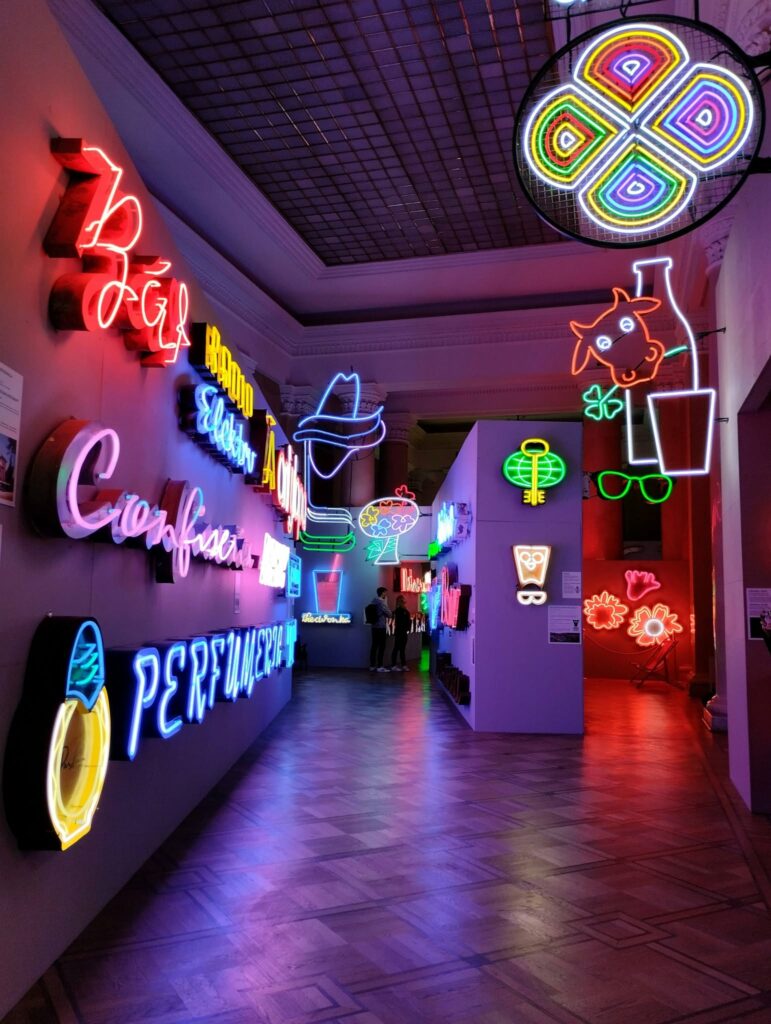
In the park around Rusałka Lake, reach the paths toward the Rose Garden (Różanka) and the Helena Majdaniec Summer Theatre, a large open-air amphitheater with a long cultural history. This theater is an avenue for summer concerts and cultural activities, so check what’s going on in the park before you visit.
Then, meet Szczecin’s modern face
Return to the centre and look for a building that appears to have came from another city—It’s easy to spot it standing out with contemporary architectural style.
The Mieczysław Karłowicz Philharmonic is one of Szczecin’s most distinctive pieces of contemporary architecture. Its pale, sharply angled façade has earned it comparisons to an iceberg or an icy palace, and the building has become one of the city’s modern symbols. For the residents, it is the icon and pride of modern Szczecin. The philharmonic impresses those whose visits are with it, both by its sound and its architecture. The building is showered with awards—the most important of them is the Mies van der Rohe Award.
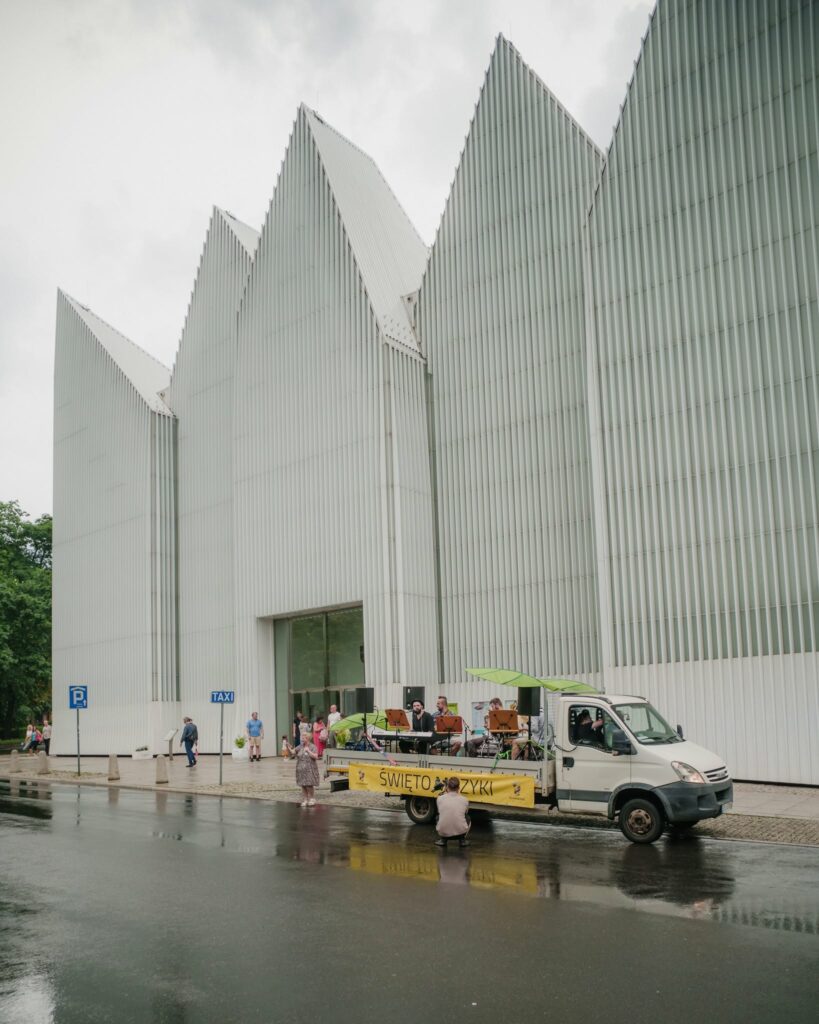
Check the schedule before your trip and consider booking an evening performance. Even if you don’t attend a concert, take a guided tour of the philharmonic edifice. Visit tourszczecin.eu to see the current tours. The building itself is worth seeing. Better yet, visiting the Philharmonic after dark offers you an entirely different impression of the building.
Go underground for Szczecin’s difficult history
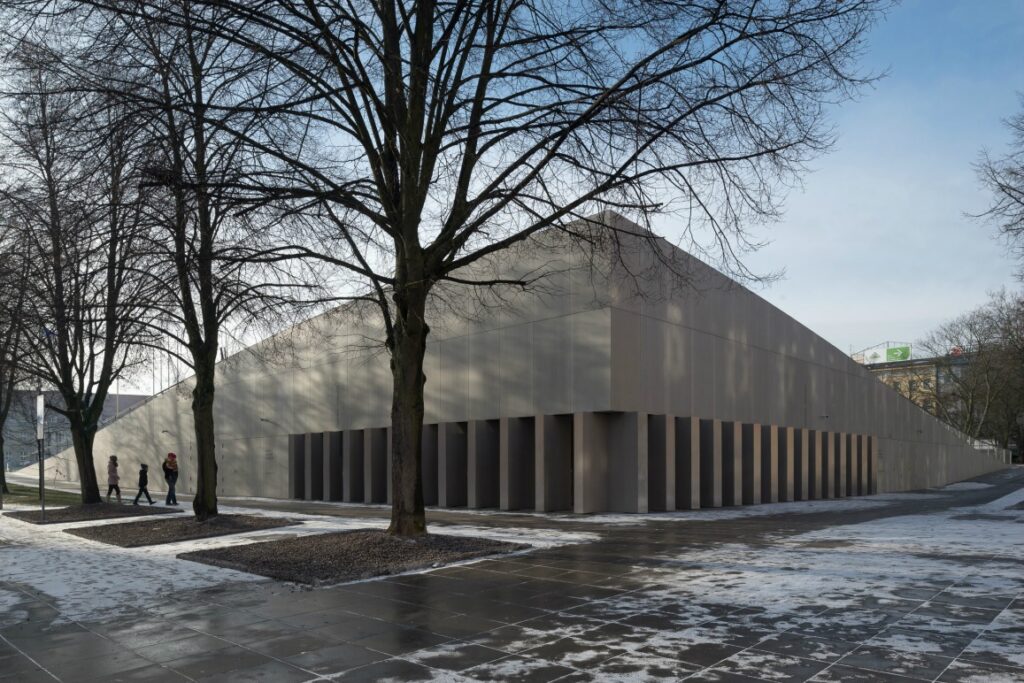
An important place to visit is the Centre for Dialogue “Upheavals,” which is a part of the National Museum in Szczecin. Understanding the city’s transition from German Stettin to post-war Polish Szczecin is made easier with the help of the museum. Szczecin can occasionally seem like an architectural riddle without it, but with it, he layers start to make sense with it.
This museum is unquestionably the greatest structure in the world and the best area in Europe! The most recent history of Szczecin from 1939 to 1989 is presented at the Przełomy Dailaogue Centre. The momentous political and social events that shaped Szczecin following World War II are included in its underground display. The museum is situated on the location where, on December 17, 1970, the first shots were fired at protesters against the communist government.
Visit the Museum of Technology and Transport
Arranged in a former tram depot, the museum has true gems among its exhibits: a two-directional Bremen-type tram and prototypes of Polish post-war automotive engineering, but above all, the fruits of the work of the genius Stoewer brothers—pioneering and luxurious vehicles manufactured in Szczecin until 1945.
Spend the afternoon exploring the city’s grand avenues
Beyond the river, a city like Szczecin has an urban layout which is unusually spacious, with broad avenues and large open squares influenced by 19th-century urban planning. Instead of rushing from attraction to attraction, spend some of the afternoon simply following the streets. The official city tourist route is a rough seven-kilometre loop connecting 42 sites, so it’s a useful framework if you want to venture beyond the obvious landmarks. By your second day, you have seen the city from the street. Now take a look at it from the river.
Day Three: See Szczecin From the Water
Łasztownia: Szczecin’s waterfront in transition
After the cruise, go to Łasztownia, the island on the other side of the Oder. One of the locations where contemporary ambitions of Szczecin are most obvious. The waterfront is a mix of old industrial and port landscapes and new attractions, public spaces and modern architecture.
Szczecin Boulevards, Maritime Science Centre, and the Boss of the Bosses.
The embankment is one of Szczecin’s symbols and one of Europe’s most famous observation terraces, according to the city’s tourism administration. The quays on both sides of the Oder River are vibrant promenades. The Piastowski Boulevard is in fact the sailors’ alley. Here you will find numerous monuments and maritime images. If you cross to the other side of the river, you will find yourself on the Łasztownia Island, where the Maritime Science Centre, which looks like a huge ship, has been operating since several years.
The Maritime Science Centre building form an impressive architectural ensemble on the wide promenade that looks out over the harbor and the Oder. It features interactive exhibitions devoted to maritime science and technology. Visit the interior if you are interested in science and sailing in their broadest sense. Additionally, right next door, throughout the summer, there is a food truck zone and a city beach a bit further down. At the end of the island. You will find ”Boss of all Bosses” monuments at the largest can of Paprykarz!
From the water the monumental embankments, bridges, the port infrastructure and the islands form one continuous landscape. You also begin to see why Szczecin’s history has always been intertwined with trade, shipping and the Baltic.
Szczecin’s waterways are fundamental to its character, and excursions through the Lower Oder Valley offer a chance to understand just how much water surrounds the city. The local tourism authority highlights cruises through the Lower Oder Valley among Szczecin’s major attractions. so maybe a boat trip will change your your perspective.
If you have a fourth day
Most of the city can be seen in three days, which is plenty for a first visit. However, if you have extra time, don’t simply add more museums. Sczecin is a completely groomed city with green spaces.
Emerald Lake
Lake Szmaragdowe, often known as Emerald Lake, is a remarkable piece of water surrounded by woodland. It used to be an open-pit chalk mine. When the mine’s ore was exhausted in 1925, water inundated it, forming the Emerald Lake. Next to it is a WWII military shelter and a clearing with a stunning panoramic view over Międzyodrze, the western portion of Szczecin, and Dąbskie Lake. You can also utilize Szczecin as a base to explore the surrounding area, which includes the Baltic shore and the scenery of Western Pomerania.
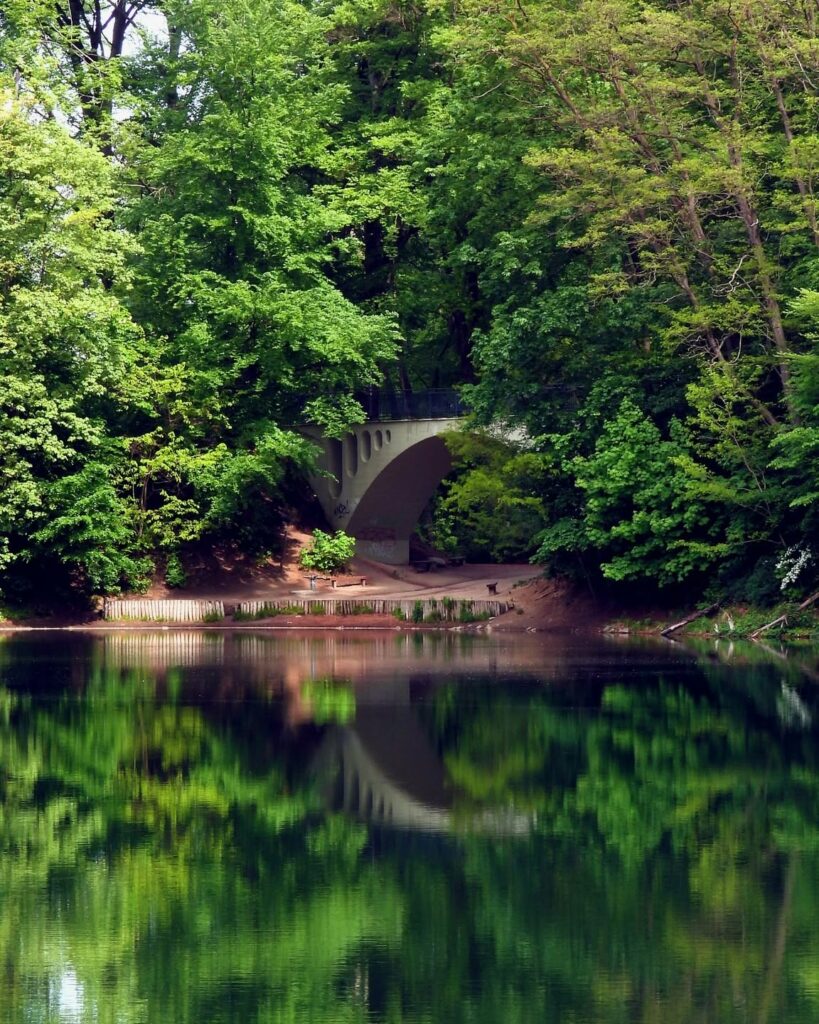
Central Cemetery
It is the largest in Poland and the third-largest in Europe. It serves as both a memorial and a park for Szczecin locals. Nobody is startled to find a jogger or a cyclist there. It is also a concert venue. There are two tourist trails at the cemetery, which opened in 1901: historical and botanical.
Water Factory
Apart from being the aquapark, the Water Factory is also the education centre where you can learn everything about water; tourists looking for relaxation should definitely visit one of the largest sauna zones in Poland.
Bismarck Tower
The northernmost of Szczecin’s observation towers was built in honor of Otto von Bismarck. It’s one of more than 200 of its kind in Europe. A guided tour takes place every weekend from the terrace. There is a panoramic view of the northern district of Szczecin and the backwaters of the Oder River and the Dąbskie Lake.
Places to slow down
For a first visit, stay somewhere central. The area around the Old Town, Pomeranian Dukes’ Castle, and the main shopping streets puts many attractions within walking distance. Staying near the river is another good option if you value views and evening walks. The important thing is not to isolate yourself in a peripheral hotel, whose pleasure comes from moving through it. Nobody knows a city better than its residents. Let us take you to Szczecin through their eyes:
Arkoński Forest Park
The Arkoński Forest Park, known to the locals as the “Arkoński Forest”, is a large green area in the north-western part of Szczecin, embracing the Warszewo Hills within the Wkrzańska Forest. In addition to the peaceful greenery, the forest conceals traces of Szczecin’s history: ruins of the Quistorp Tower, the former Arkońska forester’s lodge, the charming Lake Goplana, a health trail and the St. Brother Albert’s Center, located in the historic former Kurhaus Eckerberg Spa House.
For a more lively visit, visit the Arkonka swimming pool and recreation complex or take a leisurely walk through the elegant streets of nearby Łękno and Pogodno.
Lentz Villa
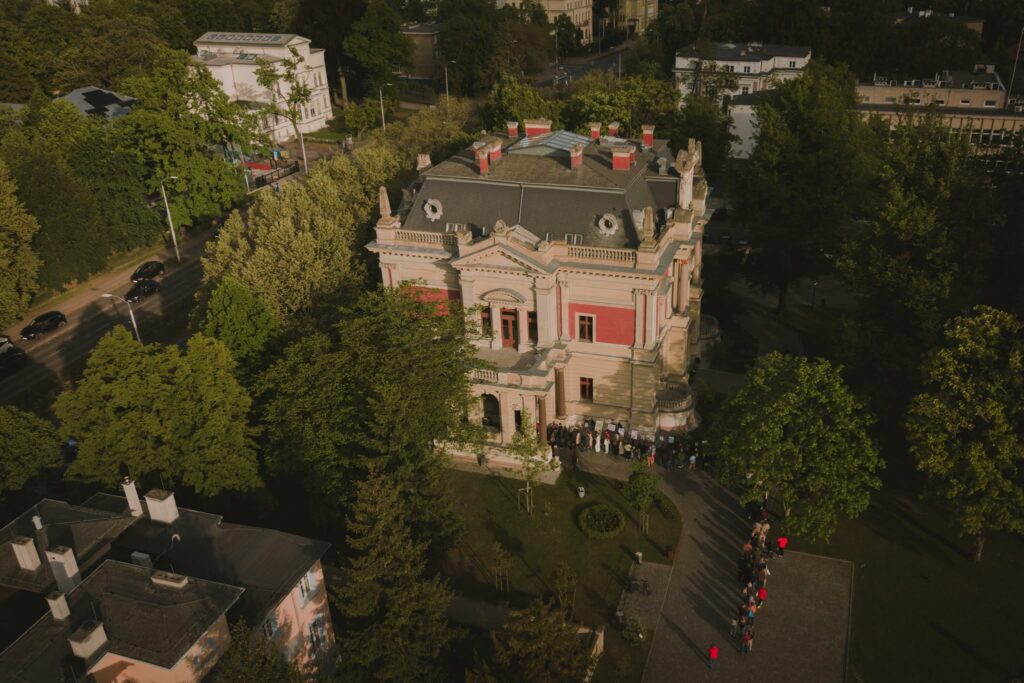
For something more prestigious and sumptuous, visit Lentz Villa, an elaborate architectural gem of Szczecin from the late 19th century, constructed by August Lentz. Take a look inside and see the beautiful interiors, which are a real treasure trove of art. The villa is one of many examples of the bourgeois development of Łekna and Bogodna streets that offers a glimpse into the wealth and lifestyle in the city. Today it serves as a cultural institution.
Hala Odra
Feel the Berlin vibe while staying in Szczecin. Hala Odra is an industrial space by the river, bustling with life thanks to food trucks, a bar, and severl stages where music is palyed until dawn. During the day, you can driop in for yoga, a flea market, or breakfast, or even try sailing on a stand-up paddleboard (SUP). Sounds wonderful, doesn’t it?
Ogrody Śródmieście
Ogrody Śródmieście at 19 Wielkopolska Street, is one of the newest places in Szczecin, which has quickly gained popularity among the locals. A huge bar at the back of a historic villa, a stage with live music, several catering outlets, the famous neon sign, and the ubiquitous greenery make the events in the downtown gardens a real pleasure.
Szczeciński Bar Smakoszy
In a former furniture factory, the Szczesin Food Lovers’ Bazar opens every Sunday. Local craftsmen and carters have their stands there. You can also hunt for antiques there.
What to eat in Szczecin
Szczecin’s culinary scene reflects its geography and history. You’ll find traditional Polish cuisine, fish, bakeries, cafés, and a thriving contemporary restaurant scene. But there are some local specialties that you should try:
Pasztecik Szczeciński (pasty with a meat or vegetarian filling)
Find out why Pasztecki is the favourite snack of Szczecin residents and tourists! Yeast dough with a savoury filling is kind of … salty doughnut that tastes best with hot borsch. Bars serving Pasztecik can be found all over the city, and the most iconic one with its atmospheric decor and the famous mosaic, is located at 46 Wojska Polskiego Avenue.

Paprykarz Szczeciński ( a spicy fish spread with rice)
The delicacy with African roots has made Szczecin famous all over Poland. Real paprykarz, prepared on site, is served in local bars and restaurants, such as Rybarex, Spiżarnia Siecińska, and Zakotwiszoni (restaurants offering the Szczecin Tourist Card discount). The Paprykarz restaurant is also famous for its… paprykarze! This famous delicacy is served as a starter with every ordered dish.
Herring roll
The herring roll is a Szczecin delicacy that combines a crispy bread roll, marinated herring, and traditional toppings. It is not without reason that it’s a sculpture that was erected on Piatowski Boulevard, depicting barrels with herring (called the city silver), referring to the times when trade in these fish—crucial to the city’s history—flourished in Szczecin. You can get a discounted herring roll with the Szczecin Tourist Card at the Przełomy Kafe.
If you want a longer dinner, look for restaurants around the center and the renovated waterfront areas and leave room for coffee or tea.
You certainly didn’t know that Szczecin is home to Poland’s oldest coffee roastery, Korona1912, which operates in a tenement house at 86 Jagiellońska Street and has been in operation since 1936. If, however, you are a fan of tea, be sure to visit the Fanaberia teahouse in the pedestrian street zone—DepTak. Here, you can enjoy a brew with magnolia petals!
Craft breweries
This is the real Szczecin gold, for which Fort Griffin has been famous for centuries. In the very centre of the city you will find as many as four restaurants that brew craft beer on site.
- Browar Pod Zamkiem- 12 Panienska Street
The breweries are named after Szczecin housing estates. Słoneczne Beer won a bronze medal in the ”Hefeweizen” category in the Craft Beer Competition – Craft of the Year (2021) – with the Szczecin Tourist Card – tasting plate complementary every order.
- Browar Stara Komenda – 3 Batorego Square
It is the first restaurant brewery in Szczecin established after World War II.
- Browar Wyszak – 8 Mściwoja II Street
Browar wyszak is located in the stylish cellars of the historic Old Town Hall building.
- Nowy Browar, 2 Partyzantów Street
The history of this place dates back to 1853, and the current premises have been operating since 2015.